Newcastle GovJam 2022
Hosting and facilitating 48 hours of public sector problem solving with a room of strangers.
Newcastle GovJam 2022, hosted at Thoughtworks Newcastle. Part of the Global Jams movement, two days where people in any role work on real public sector problems. The Thoughtworks experience design team in Newcastle hosted designers, career changers, developers and students from across the North East. I helped build the event from finding the people to facilitating the room, and co-authored the company's account of it with Gabe Fender, Helena Lyhme and Mel Hannaway. The photographs in this case study are from the event.
A room of strangers from very different backgrounds had 48 hours to learn new techniques, work on real problems and build something they could show. That only happens if the space, structure and tone are right.
Create a safe, inclusive space where people felt able to take creative risks, learn from each other and leave with concrete skills, not just a nice weekend.
I worked across organising, community building, facilitation and design. I helped find the participants, set up the room, ran activities, supported teams through the two days, and co-authored the Thoughtworks blog post about the event.
Six teams formed from strangers, each took a real public sector problem from a secret theme through research, prototyping and a public showcase. People left with new techniques, new contacts and the confidence to try them at work.
48 hours of post-its, rapid research and prototyping.
A GovJam is not a hackathon or a design sprint. The point is skill building, learning new techniques from each other, and experimenting in a safe space on problems that could make a difference to citizens' lives.
In November 2022 the Thoughtworks experience design team in Newcastle hosted one for people from across the North East, including designers, career changers, developers and university students. Most of us had never met. By the end we were teams.
Four hats over one weekend.
This was not a project I was handed. It was one I helped build, from finding the people to facilitating the room.
- ·Organiser, helping shape the agenda, the venue setup and the participant mix
- ·Community builder, reaching people across the North East design and tech scene
- ·Facilitator, running activities, holding time and supporting teams through the two days
- ·Co-author, writing the Thoughtworks experience design blog post with Gabe Fender, Helena Lyhme and Mel Hannaway. Read it on the Thoughtworks blog via the link at the bottom of this page.
A safe, inclusive space comes first.
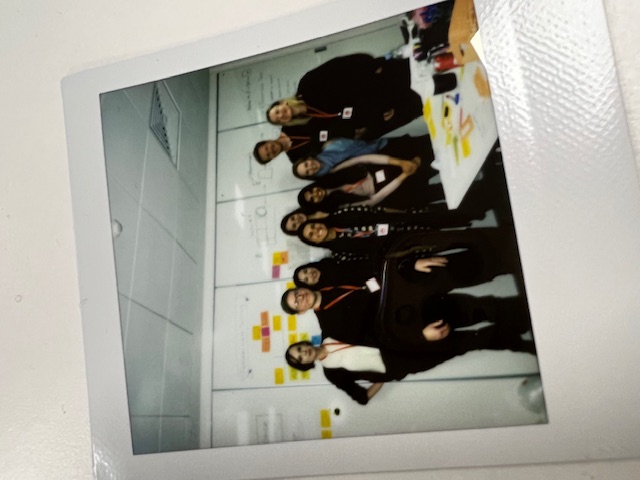
People take creative risks only when they feel safe. So before any problem solving, we built the team. We opened with team forming activities and a keynote on inclusive teams, then set up the walls so the whole group could see the plan, the work and each other.
A visible agenda, a team wall, and a feedback space on the wall meant nobody was guessing what came next. That structure is what lets people relax and push outside their comfort zones.
From a secret theme to a tested prototype.
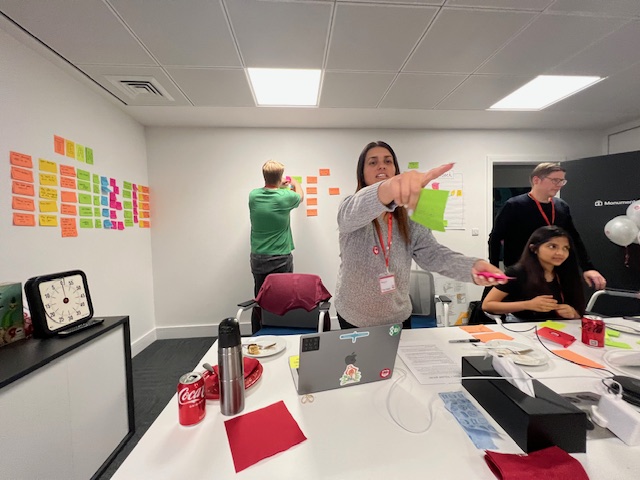
The two days followed a tight rhythm. Each step was short on purpose, so teams kept moving and kept learning, instead of polishing a single idea for hours.
- ·Form the team, activities and a keynote on inclusive teams turned strangers into groups that trusted each other
- ·Reveal the theme, the secret theme video dropped and we brainstormed against it
- ·Crazy 8s, fast sketching to get many ideas out quickly, then dot voting to converge
- ·Guerrilla research, we took rough ideas to people on the streets of Newcastle for real, fast feedback
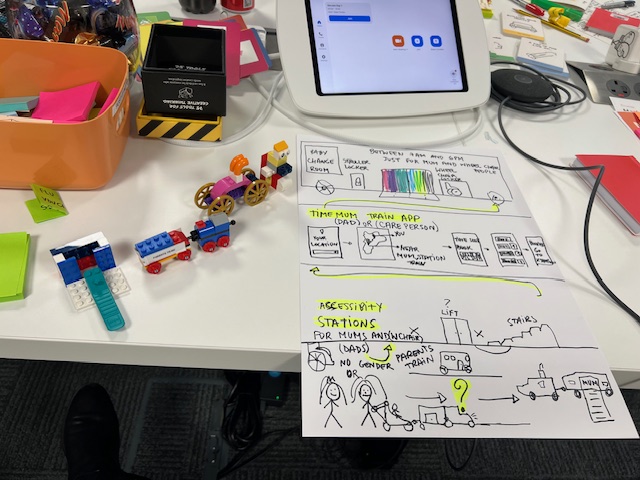
- ·Prototype, paper, Lego and whatever was on the table, iterating in hours not weeks
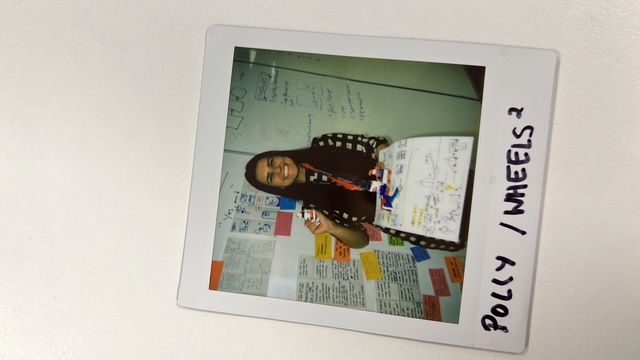
- ·Showcase, each team presented and articulated their thinking, practising the hardest skill of all
Real public sector problems, prototyped fast.
Teams worked on problems that touched real services, from access and inclusion to communication with citizens. The output was never the point on its own. The point was the practice of going from a vague theme to something testable in front of a stranger in 48 hours, and being able to talk about why.
Jams can make innovations, but they always make innovators.
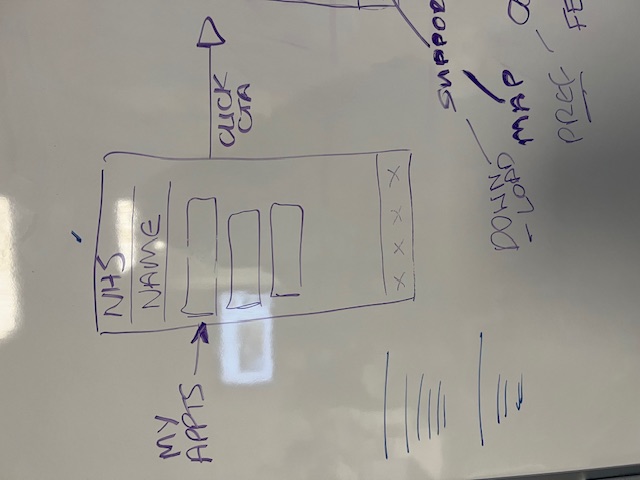
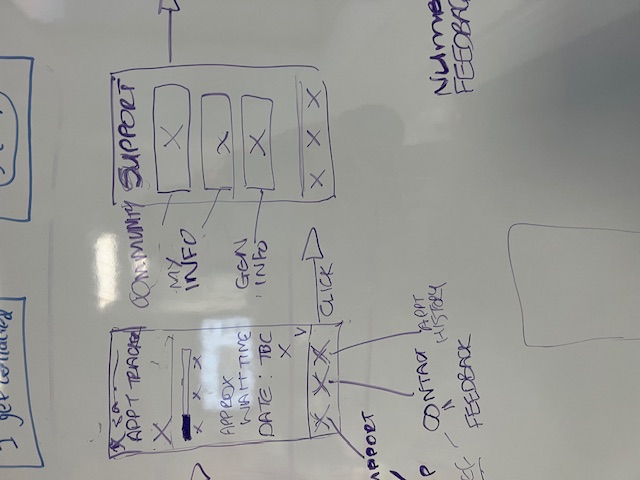
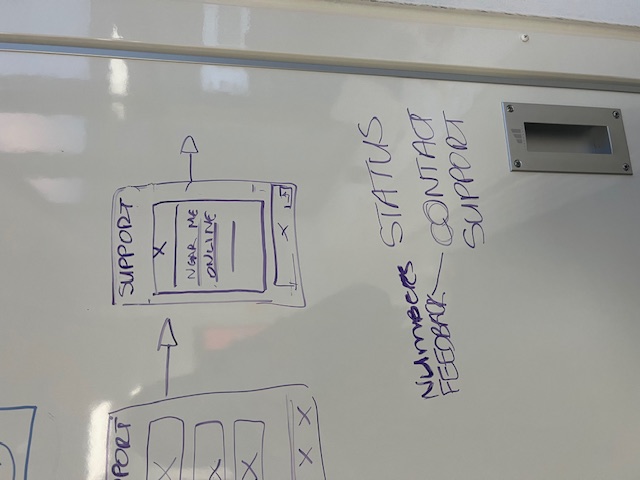
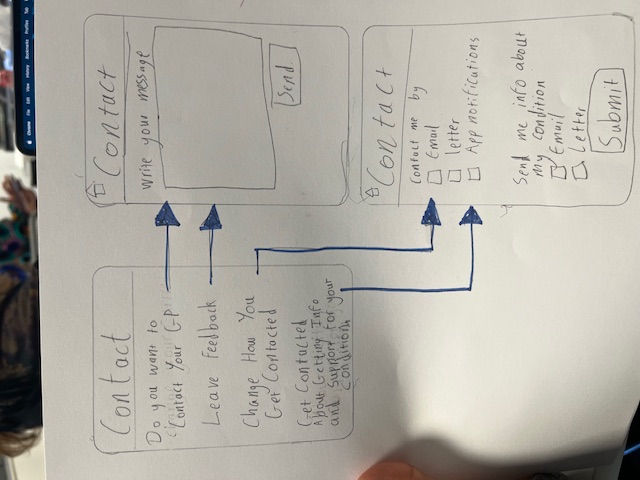
We measured the Jam the way we taught people to work.
We gathered feedback throughout using a Rose, Bud, Thorn method on the wall, then sent a survey afterwards. People left with concrete skills, not just a nice weekend.
One participant said it was a very welcoming, inclusive environment that helped them step out of their comfort zone to talk in public. That kind of comment is the real outcome of a well run Jam.
What this taught me as a designer and organiser.
Running a Jam stretched a different muscle from designing a product. The work was not the prototype, it was the conditions that let a room of strangers make one. That is a design problem too, and one I love.
Hosting also sharpened how I show up inside teams day to day. Clear agendas, visible walls, named activities and explicit psychological safety are not just for events. They are the small acts of design that make any room more useful.
- ·Design the room before you design the work, structure is what gives people permission to play
- ·Inclusion is set in the first hour, in the language, the activities and who gets to speak
- ·Short cycles beat long polish, especially when people are learning a new technique
- ·Write it up, the value of an event multiplies when others can borrow what worked
TimeMum, from paper to a working flow.
A digital rebuild of the paper prototype we sketched at the Jam. Pick the next carriage with space for a stroller, then check which accessibility stations are coming up on the line. Designed for any parent or carer travelling with a baby, no gender assumptions.
Next mum-friendly carriage
Prototype only, no live data. Built from the team's GovJam sketches using the portfolio's own design tokens.